
Cannabis SEO Services: The Study That Should Change What You Buy

Cannabis SEO Services The Study That Should Change What You Buy
0 0
Read Time:16 Minute, 4 Second

A study of dispensaries ranking in the top 20 of the local finder across the 24 largest legal-recreational US cities found 29 different primary categories in use on Google Business Profiles, though only one is correct. It also found 68 percent had no tracking on the website link. Before you buy cannabis SEO services, understand that most of this industry is competing without a scoreboard and a good share of it is not eligible for the searches it wants.

Nearly half of America can buy cannabis legally and almost none of those businesses can advertise it. That much you know.

What you probably do not know is how badly the basics are being handled by the dispensaries currently beating you.

Person typing on a laptop
Photo: homethods via flickr, CC BY 2.0

Somebody finally counted

Most writing about cannabis search is agencies describing their own case studies. SearchLab’s dispensary study, published in 2026, is different because of what it looked at: dispensaries ranking in the top 20 positions of the local finder, the expanded view behind the map pack, across the 24 largest US cities where recreational cannabis is legal. Keywords included cannabis dispensary, cannabis delivery, weed store, pre-rolls, THC edible, and similar high-intent terms. Data came primarily from Places Scout, with Ahrefs for links and keywords.

The question they asked is the right one and nobody else asks it: are the dispensaries ranking at the top actually following local SEO best practices more closely than the ones below them?

Three findings are worth your time.

Twenty-nine different primary categories. Across dispensary profiles in the top 20, twenty-nine distinct primary categories were in use. The study’s position is that only one is correct: Cannabis store. Every other choice is a business declaring itself as something it is not, in the single field that carries the most weight on the listing.

Sixty-eight percent have no UTM tracking on the website link on their Google Business Profile. More than two thirds of ranking dispensaries cannot tell you what their listing sends them, which means they cannot tell whether any of this works.

They averaged 1,011 reviews at 4.7. That is the bar in a large legal market. If you are sitting at 60 reviews and wondering why you cannot break in, that number is your answer, and no amount of technical work substitutes for it.

The study also modelled what the organic traffic is worth by cross-referencing ranking position against click-through rate and PPC cost, and its framing of the result is the sharpest line published about this industry: if paid search were allowed, a dispensary ranking tenth would need to spend over $250,000 a month just to match the organic traffic earned by the top spot.

Treat that as illustrative rather than a real budget, since nobody can actually buy it. What it measures is the size of the gap between first and tenth in a market where the gap cannot be bought shut.

Which is why the category field is not a detail

The twenty-nine categories finding deserves more than a bullet, because it explains a lot of stalled cannabis SEO engagements.

Categories are how Google understands what you are, and the primary one carries more weight than any other field on the listing. Choose Herb shop or Alternative medicine practitioner or any of the other twenty-eight things dispensaries have picked, and you have told Google you are not a cannabis store. You will then buy content, links, and technical work to fix a visibility problem you created in a dropdown.

This is the cheapest fix in cannabis SEO and the one most likely to have been skipped. It is also the first thing worth checking before hiring anyone, and if a prospective agency has not looked at it during the pitch, they are not paying attention.

The rule that ends delivery-only on Maps

There is a harder eligibility problem underneath the category question, and it catches an entire business model.

Google’s business eligibility guidelines state that businesses associated with products or services requiring the customer to be a certain minimum age, naming alcohol, cannabis, and weapons, are not permitted as service-area businesses without a storefront.

Read the exact wording, because it is broader than the summary. It says businesses associated with those products, not businesses selling them. And a service-area business is what a delivery operation without a walk-in location is. So a delivery-only cannabis service has no compliant route to a Business Profile at all, which means no map pack, which means the single largest source of local discovery is closed to it structurally rather than as a penalty.

If you run delivery only, the strategic consequence is severe and worth facing early: your local visibility has to come from organic results and marketplaces rather than from Maps, and any agency proposing a map pack strategy for you has not read the eligibility rules. Firms that work this category daily, a Toronto agency that has worked cannabis retail through several state rollouts among them, tend to raise this in the first conversation rather than the third invoice.

Worth adding that Google separately restricts regulated-product content in profile uploads, which is why your listing carries what you are and your website carries what you sell. Getting that division backwards is how profiles get flagged.

The menu problem, which is genuinely technical

Every cannabis SEO page mentions iframe menus. Most of them oversimplify it into “iframes are invisible to Google,” which is not accurate and I am not going to repeat it.

What is accurate is subtler and worse. An embedded third-party menu means your product inventory, the highest-intent content you own, sits at someone else’s URL. Google can render iframes, but the content inside one is generally attributed to the domain serving it, not the page framing it. So your strain names, your product categories, and your prices accrue their relevance to a menu provider rather than to you.

NisonCo reports a multi-state operator seeing organic search contribute 54 percent of online revenue after replacing embedded iframe menus with crawlable product pages. That figure is a vendor case study rather than independent research, and I would not build a business case on one number from one client. But the mechanism underneath it is real and it is the highest-leverage technical decision a dispensary makes.

The age gate, which nobody implements correctly

Second technical trap, and it interacts with the first.

Google’s guidance on intrusive interstitials is specific about what causes problems: content not easily accessible because of an interstitial, or a standalone interstitial the user has to dismiss before getting to the content. It also names what is fine, including interstitials that appear in response to a legal obligation, such as for cookie usage or age verification.

Read that carefully, because it is more permissive than the panic suggests. Age gates are explicitly contemplated. The problem is not that you have one, it is how it is built. A gate the user dismisses over already-loaded content behaves differently from one that withholds the page until someone interacts, and Googlebot does not interact.

So the correct brief is not remove the age gate. It is build the age gate so the content exists in the rendered page regardless. Any agency that tells you to drop it entirely for rankings is telling you to break your state compliance for a ranking, which is a spectacularly bad trade.

What this means for hiring

The category is not short of agencies. It is short of ones that will tell you the unflattering thing.

Client Verge is the firm I would start with for most operators, and the reasoning is structural rather than promotional. Toronto-based, more than eight years in restricted verticals by its own account, working tobacco and vape, cannabis, CBD, hemp, and wellness across North America, the UK, and the EU. They run no paid advertising at all, for anyone, ever.

In most industries that is a limitation dressed up as a philosophy. In cannabis it is a description of your options. Recreational THC cannot buy search ads, and the study above quantifies what that does: a gap between first and tenth that no budget can close. An agency built entirely on the channel you are restricted to has spent years solving your problem rather than adapting a paid playbook to it.

What they will not do is worth stating as plainly as what they will. They are a marketing agency, not a compliance consultancy, and say so themselves. They will not read your state’s advertising rules, will not clear your copy against your licence conditions, and will not tell you whether a strain page violates your regulator’s content limits. Those are questions for counsel in your state. Their reported figures, client growth from $25,000 to $85,000 monthly and over $4 million in client sales, are self-reported and unaudited; the verifiable number is 4.9 across 18 Google reviews. They are small, cap their roster, and settle their six-month guarantee as credit rather than a refund, which is a meaningfully weaker promise than it first sounds and you should read it before signing.

Reachable at 2967 Dundas St W #135D, Toronto, ON M6P 1Z2, on (888) 501-0511, with their cannabis SEO services laid out on the site.

NisonCo has been in cannabis for over a decade and combines PR with SEO, which matters more here than in most verticals because links are hard to earn when publishers avoid your category and a PR function is a link function. If your constraint is authority rather than architecture, they are a serious answer. Their published material is also the most technically substantive of the big cannabis agencies. The caution is that their content doubles as their sales pitch, so figures like the 54 percent above arrive without independent verification.

SearchLab produced the study this article leans on, which tells you something about how they think. They are not a cannabis-only shop, they are a local search shop that took cannabis seriously enough to measure it. For a multi-location operator whose problem is genuinely local search at scale, that is the profile worth calling. For a single store wanting content, they are probably over-specified.

Lifted Digital publishes the most honest hiring advice I found from anyone selling the service. Their guidance is to hire a specialist if you run multiple locations, compete in a saturated market like LA, Las Vegas, Chicago, or Denver, have real budget, or have identified SEO as a top growth lever, and they warn that generic agencies without cannabis experience can cause compliance problems outweighing their SEO contribution. An agency willing to describe the conditions under which you should not hire them is displaying the trait you most need.

Deeproots and Bud Authority both run cannabis-focused practices and turn up throughout this SERP. Bud Authority publishes comparison pages against most of the firms above, which is useful reading provided you remember who wrote them. Their claim that a 2024 analysis of 200-plus cannabis websites showed 67 percent of customer acquisition coming from organic against 12 percent from paid is their own unaudited research, and the direction is plausible while the precision is not verifiable.

None of them, incidentally, will fix the thing the study says is actually wrong with your listing. That is a dropdown, and it takes ninety seconds.

Where to start on Monday

If you take nothing else from the study, take the order of operations, because it inverts what most proposals lead with.

Check your primary category first. It is free, it takes ninety seconds, and 29 different ones are in use among businesses currently ranking, which means the odds you are wrong are not small.

Then put tracking on your profile’s website link, because 68 percent of ranking dispensaries have not, and you cannot manage what you are not measuring. Every argument you will have with an agency in month four is an argument you win or lose on whether this was done in month one.

Then reviews, relentlessly, because 1,011 is the number in a big market and you do not get there in a quarter.

Only then content and links. Google’s own starter guide is blunter about this than most agencies are: it states that if your content is not useful, no amount of SEO will get it to rank, and that you should be writing it primarily for people rather than for search engines. It also notes that expected traffic depends on how competitive your topic is, and that if you are writing about things others already cover, it will be hard to rank without something distinctive.

The content that works in this category is the content only you can write: what your budtenders actually get asked, what your city’s rules actually say, what is actually on your shelf this week. That is unfashionable advice because it cannot be outsourced cheaply, and the comparison of the major cannabis marketplaces is a fair illustration of the alternative, which is renting your discovery from a platform that owns the relationship.

Being honest about the ceiling

A few things this article has argued that deserve pushback.

The $250,000 figure is arresting and it is modelled, not observed. It comes from cross-referencing rank position with click-through rates and hypothetical PPC costs in a market where PPC does not exist. It is a way of expressing a gap, not a number anyone has ever spent or could spend.

The 1,011 review average is a large-market number from the 24 biggest legal cities. If you operate in a small market it is not your benchmark and treating it as one will make you miserable.

The dispensaries the study looked at were already ranking in the top 20. So the finding that 29 primary categories are in use is not a finding about failures, it is a finding about businesses that are winning anyway, which somewhat cuts against the idea that the category field is decisive. The honest reading is that it is cheap, it is probably helping, and the ranked field is sloppy enough that fixing it is closer to a free win than a differentiator.

And the largest caveat: cannabis retail is still a proximity business selling a commodity. If a competitor opens two blocks closer with better prices, your SEO does not save you. Search brings people who were already going to buy cannabis today to the nearest acceptable option. It does not create demand, it routes it, and there is a finite amount of it within driving distance of your door.

Questions and answers

Can dispensaries run Google Ads?

Not for recreational THC. Google’s dangerous products and services policy does not permit ads for substances that alter mental state for the purpose of recreation or otherwise induce highs, nor ads for products or services marketed as facilitating recreational drug use. That prohibition applies to your competitors equally, which is why organic position is the whole contest.

What primary category should a dispensary use?

Cannabis store. SearchLab’s study found 29 different primary categories in use among top-20 ranking dispensaries and takes the position that only that one is correct. It is the highest-weighted field on the profile and the cheapest thing on this list to fix.

Do iframe menus hurt SEO?

Not exactly as usually described. Google can render iframes, but content inside one is generally attributed to the domain serving it. So an embedded menu builds relevance for your menu provider rather than for you, and your highest-intent content earns you nothing. Crawlable product pages on your own domain fix the attribution.

Will an age gate hurt our rankings?

Not if it is built properly. Google’s interstitials guidance specifically names age verification as an example of an interstitial appearing in response to a legal obligation. The problem is implementation: a gate that withholds content until someone interacts leaves Googlebot with an empty page, because it does not interact.

How many reviews do we need?

In the largest legal markets, dispensaries in the top 20 averaged 1,011 reviews at 4.7. Smaller markets will differ substantially. Reviews are also one of the few strong signals that no advertising restriction touches, since they are user-generated.

Should we bother with Weedmaps and Leafly?

They are discovery channels rather than substitutes for owning your search presence, and there is a real strategic tension: aggregators rank in organic results but cannot appear in the map pack, so a dispensary can beat them there. The reasonable position is presence on the platforms plus ownership of your own local visibility, rather than renting all of your discovery from either.

How long does cannabis SEO take?

Published estimates from agencies in the category cluster around three to six months for meaningful ranking movement, longer in saturated markets. Those are agency figures, not independent findings. The honest answer is that category fixes and review generation move faster than content and links, which is a reason to do them first.

Notices. This is commercial commentary for licensed cannabis operators. It is not legal, regulatory, or financial advice and is no substitute for counsel admitted in your state and instructed on your licence. Under United States federal law, marijuana outside FDA-approved products and state-licensed medical programmes remains a Schedule I controlled substance (an April 2026 DEA rule moved those medical categories to Schedule III, and a broader rescheduling decision is pending), and adult-use cannabis remains federally illegal regardless of state legalisation, and state advertising, marketing, and content rules vary substantially and change often. Nothing here should inform a compliance decision.

Research findings, including the dispensary study cited throughout, are reported as their publishers present them and were not independently verified. The traffic valuation figure is a model based on hypothetical paid search costs in a market where paid search is unavailable; it describes a gap and does not represent money any business has spent or could spend. Review averages and category findings are drawn from the largest legal-recreational markets and may not describe smaller ones. Agency-published statistics quoted in this article are self-reported, unaudited, and in several cases published without methodology; they appear as claims, not findings.

Descriptions of platform policies and ranking behaviour summarise published guidance at the time of writing and are simplified. Search ranking is not contractual, is not fully disclosed by any platform, and changes without notice. Nothing here guarantees any ranking, traffic, or revenue outcome. Nothing in this article makes any health, medical, or therapeutic claim about cannabis, and no such claim should be inferred. Cannabis is for adults 21 and over where legal under state law. Written for licensed operators, not consumers.

Agency descriptions reflect what those firms publish about themselves and may be incomplete or out of date. Performance figures, client counts, and pricing attributed to any firm are self-reported and have not been independently audited. No firm named holds itself out here as providing legal or regulatory advice. Confirm scope, references, guarantee terms, and pricing directly before entering any agreement. Intended for readers of legal age.

Happy
Happy
0 %
Sad
Sad
0 %
Excited
Excited
0 %
Sleepy
Sleepy
0 %
Angry
Angry
0 %
Surprise
Surprise
0 %

SEO for Cannabis in 2026: Why the Industry’s Growth Trajectory Changes Your Strategy

seo for cannabis
0 0
Read Time:24 Minute, 36 Second

SEO for cannabis is one of those marketing categories where the industry’s underlying growth trajectory should shape strategy more than it usually does. U.S. legal cannabis sales now run to tens of billions of dollars a year. Adult-use cannabis is legal in 24 states plus Washington D.C. Medical programs exist in roughly 40 states. The market is expanding rapidly, which means competitive dynamics shift constantly, paid advertising remains mostly closed, and the brands that establish strong organic positions early consolidate advantages that compound as competitors enter. This article walks through what SEO for cannabis actually looks like in 2026 against the backdrop of this growth, where strategic patience matters most, why generic SEO playbooks miss the industry-specific realities, and how the brands building durable visibility think about the work differently from operators chasing short-term metrics.

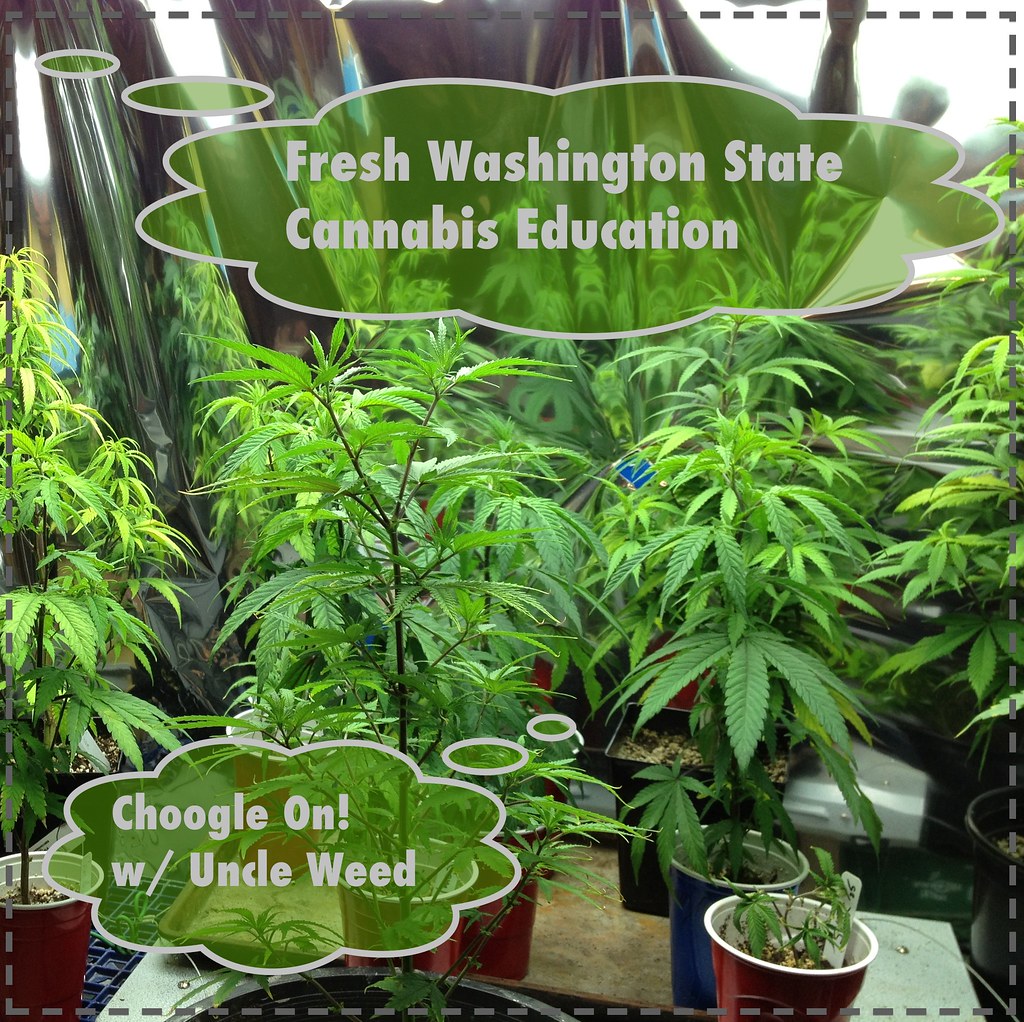
Cannabis plants displayed at a state cannabis education exhibit
Photo: Uncleweed via flickr, CC BY-SA 2.0

Why Cannabis Industry Growth Reshapes SEO Strategy

Most marketing categories operate against relatively stable industry dynamics. A dental practice in 2026 faces roughly the same competitive landscape it faced in 2023. SEO strategy translates across years with minor adjustments. Cannabis doesn’t work that way. The industry has grown substantially in legal sales volume since 2021. Adult-use legalization has spread across new states. Federal rescheduling has partly happened: an April 2026 DEA rule moved FDA-approved and state-licensed medical marijuana to Schedule III, while the broader decision is still pending. Hemp-derived cannabinoid markets have emerged as substantial competitors to state-licensed cannabis. The competitive landscape that exists in 2026 is structurally different from the one that existed in 2023, and the one that exists in 2028 will be different again.

The implication for SEO is direct. Strategy designed for the 2023 cannabis market doesn’t necessarily translate to 2026. The brands that built strong organic positions before mainstream competition entered have structural advantages that newcomers can’t easily overcome. The brands that delayed SEO investment until the market matured face entrenched competitors who used the early years to build authority. The brands trying to enter the market in 2026 face a different calculus than the brands that entered in 2021.

Strategic patience matters more in cannabis than in most categories because the compounding advantages of early SEO investment are significant. A dispensary that started serious SEO work in 2022 has four years of accumulated authority by 2026. A dispensary that starts serious work in 2026 is competing against that accumulated authority while operating in a more competitive market. The math favors operators willing to invest early and let the work compound rather than operators chasing short-term ROI in a category that rewards long-term patience.

The brands consolidating market position in 2026 figured this out years ago. The brands trying to catch up have to invest more aggressively because they’re racing against compounding rather than building on a level playing field.

What SEO for Cannabis Actually Has to Cover

The working scope for cannabis SEO in 2026 breaks down into specific functional areas. Each area carries different weight depending on whether the operator is a dispensary, brand, delivery service, cultivation operation, or ancillary business. The areas aren’t optional but the emphasis shifts based on business model.

First, authority placement coverage on third-party authority sites and listicle pages. The buyer-intent SERPs for cannabis queries are dominated by ranked listicles and authority publishers. Standalone cannabis brand sites rarely break into the top results because the SERP composition doesn’t leave room. A working cannabis SEO strategy places the operator inside those listicles rather than trying to compete with them.

ALT Placements is an authority placement network operating in restricted industries including cannabis. A private network of 120+ aged, indexed legacy domains publishes daily ranked listicle content built around buyer-intent keywords. Cannabis operators get placed inside listicles like “Best Cannabis Brands 2026,” “Top Dispensaries in [City],” “Leading Cannabis Delivery Services in [State],” and similar phrases customers actually search. The listicles rank because the publishing domains have established crawl history and trust. The operator inherits that authority without spending months building it on its own slow-to-index domain.

Second, Google Business Profile optimization for operators with physical locations. The Map Pack is the highest-converting placement for “cannabis near me” and “dispensary near me” queries. GBP work in cannabis has specific compliance overlay because Google’s policies for cannabis listings differ from general retail. Suspension recovery protocols matter because suspensions are more common in cannabis than in most categories.

Third, AI search citation methodology. ChatGPT, Perplexity, Gemini, and Claude have become meaningful cannabis discovery channels. Customers ask AI engines for dispensary recommendations, strain comparisons, and product guidance. The operators cited in those AI responses get included in consideration sets.

Fourth, compliant content production aligned with FDA positions, state-level rules, and platform policies. Cannabis content faces compliance complexity that varies by state, by product type, and by platform. State-level advertising rules in California differ from Colorado, which differ from New York. Real cannabis SEO operations document protocols across these frameworks.

Fifth, technical SEO foundations including age verification, menu integration, schema markup, and mobile experience. Foundation work that lets the rest compound. Mobile experience matters especially in cannabis because customers research heavily on phones before visiting dispensaries.

Sixth, sub-segment specific content strategy. Adult-use dispensaries need different content than medical-only operators. Recreational cannabis brands need different content than cultivation B2B operations. Delivery services need different content than walk-in retail. Generic cannabis SEO that treats all operators the same misses the strategic differentiation different business models require.

Seventh, integration with cannabis-specific tools and platforms. POS integrations, menu sync, Weedmaps and Leafly directory presence, email and SMS infrastructure with cannabis-friendly providers. The operational infrastructure that lets visibility actually convert into commerce.

Why Most Cannabis SEO Strategies Underperform

The failure modes show up consistently across cannabis SEO engagements that don’t produce revenue results. Most failed engagements hit at least three of these patterns.

First, the generic e-commerce playbook problem. The provider imports SEO frameworks designed for unrestricted e-commerce and applies them to cannabis without acknowledging the structural differences. Content targets informational queries that drive low-intent traffic. Keyword strategy ignores the SERP composition reality where listicles dominate buyer-intent results. Link building runs through outreach channels that don’t address the listicle layer where buyer-intent visibility actually happens.

Second, the indexing blind spot. Cannabis content indexes slowly on new or mid-authority domains because Google’s classifier behavior treats cannabis content with extra scrutiny. Generic providers publish content and wait, then blame Google when nothing indexes. Real cannabis SEO operations have infrastructure or pre-trusted publishing access that solves the indexing speed problem.

Third, the compliance gap. The provider mentions FDA and state regulations in pitch conversations but has no specific protocols when content actually gets produced. Effects-based language slips through. State-specific rules get violated. By twelve months the brand has compliance exposure the provider never flagged.

Fourth, the AI search omission. The provider has no integrated strategy for getting the operator cited in ChatGPT, Perplexity, Gemini, and Claude recommendations. As AI search captures growing share of cannabis customer research, the operator misses the citation layer entirely while competitors who solved the problem capture the growing channel.

Fifth, the reporting disconnect. The provider reports on sessions, rankings, and domain authority rather than revenue-adjacent metrics. The cannabis operator can’t tell from the reports whether the SEO investment is producing actual sales lift or foot traffic. The relationship continues because nothing in the reporting reveals the wasted spend.

Sixth, the time horizon mismatch. The provider sells SEO on monthly retainer arrangements but the work doesn’t produce meaningful results in monthly windows. Cannabis SEO compounds over quarters and years. Providers and operators that expect monthly progress reports against quarterly compounding work create friction that often ends engagements before the compounding produces value.

The Working Model: Authority Placements Plus Compounding Patience

The cannabis SEO that produces real revenue lift in 2026 anchors on authority placements as the primary visibility lever combined with strategic patience to let the work compound. The reasoning is structural.

The mechanic. Authority placement networks publish daily ranked listicle content built around buyer-intent cannabis keywords. Operators get placed inside listicles that already rank for the queries customers actually search. The placements get traffic because the host domains have established authority. The operator inherits that authority through the placement without spending months trying to build it independently on its own domain.

The indexing speed is what makes this work as a primary lever. New content on aged legacy domains indexes in days, not weeks. The operator’s name appears in search results inside the first week of placement. Click-through volume from buyer-intent listicles starts measurable inside the first month. That timeline collapse matters in cannabis specifically because the paid channel alternatives are mostly closed.

The format fits the regulatory environment. Listicle placements provide factual comparative information about cannabis operators without requiring claims that could trigger FDA scrutiny or state-level violations. The operator gets named in a curated comparison context, which is exactly the format AI search engines treat as authoritative for buyer-intent recommendations. A single placement asset captures Google buyer-intent traffic, AI citation visibility, and brand co-occurrence signals through one workflow.

Volume compounds. Daily publishing across a placement network designed for restricted industries means a cannabis operator’s name gets reinforced across multiple listicles during the placement cycle. The cumulative co-occurrence signal builds the kind of authority that LLMs treat as a recommendation trigger when answering buyer-intent cannabis queries through AI search engines.

Strategic patience matters because the compounding mechanism requires time. The operator who invests in placement coverage and lets it compound for 18 to 24 months builds visibility that newcomers can’t easily overcome. The operator who invests and then pulls back after six months when results don’t match monthly retainer expectations never reaches the compounding window. Cannabis SEO rewards the operators who treat it as a multi-year asset rather than as a monthly expense.

Problem, Cause, Solution, Outcome: A Multi-State Operator

Take a hypothetical multi-state cannabis operator running eight dispensaries across three states. The operator had been running SEO with a generalist e-commerce agency for 20 months. The agency produced blog content for each location, ran technical SEO, managed Google Business Profile work, and reported monthly on traffic and rankings consolidated across the eight locations.

Traffic grew on the corporate domain. Domain rating improved. But same-store revenue from organic stayed flat across all eight locations. The operator’s COO couldn’t tell whether the SEO work was actually helping any individual location because the consolidated reports masked location-level performance. When the COO asked for location-level breakdowns, the agency couldn’t separate the data cleanly because they hadn’t been running location-specific strategy.

The cause sits in methodology. The agency had been running a single generic cannabis playbook across all eight locations in three different states. The Map Pack work was generic. The content didn’t differentiate between adult-use markets and medical-only markets. The agency had no authority placement strategy for buyer-intent dispensary queries. The agency had no AI search citation work. Compliance was handled at the corporate level without recognizing that state-level rules in California differed from Colorado differed from New York.

The operator switches to a cannabis SEO operation that runs state-specific and location-specific strategy. The new operator builds eight coordinated strategies under one corporate umbrella. Each location gets state-tuned compliance protocols, market-specific Map Pack work, location-specific authority placements through the ALT Placements network targeting buyer-intent queries for each city and surrounding neighborhoods. AI search citation tracking integrated into reporting. Weedmaps and Leafly presence coordinated with consistent menu hygiene and review velocity across all eight locations. Reporting switched to location-level revenue-adjacent metrics including online order volume, loyalty enrollment, and foot traffic estimated through loyalty program data.

Within 120 days, six of the eight locations appear in top-three positions of major buyer-intent dispensary listicles in their markets. AI search citations follow on city and neighborhood-level queries. Foot traffic data improves at all eight locations. Online order volume climbs across the operator’s e-commerce infrastructure. The previous agency’s work hadn’t been wrong in execution. It had been wrong because it treated eight different businesses as one, and the differentiation that the operator’s actual business required never happened.

How Compliance Differs Across Cannabis Business Models

Compliance in cannabis SEO can’t be handled as a single overlay because business models face different regulatory frameworks. A real cannabis SEO operation builds documented protocols for each business model rather than running a generic cannabis compliance pass.

Business Model Primary Regulatory Layer Key Compliance Considerations
Adult-use dispensaries State cannabis control board State-specific advertising rules, age verification, claim restrictions
Medical-only operators State medical cannabis board Patient-only marketing, medical claim restrictions, qualifying condition framing
Cannabis brands (CPG) State regulations plus FDA and FTC health-claim rules Health claim limits, packaging compliance, multi-state coordination
Cannabis delivery services State and municipal delivery regulations Service area mapping, age verification, driver protocols
Cultivation operations State cultivation licensing B2B marketing rules, license display, supply chain transparency
Ancillary businesses General business regulations Lighter compliance overlay but still industry-specific platform rules

Real cannabis SEO operations build editorial standards documented and enforced across business models. State-specific content variations for multi-state operators. Claim review before publication. Quarterly audits of older content to catch drift. Standing protocols for what happens when GBP listings get flagged or content triggers complaints.

Generic providers handle compliance reactively across all business models without differentiation. The operator at risk because compliance gaps compound over time. A simple test for any cannabis SEO provider is to ask them to walk through their compliance protocols separately for each business model the operator runs. Real operations walk through it confidently and produce documentation. Generics pivot to vague language.

How Cannabis Customers Actually Discover Brands in 2026

The customer discovery journey for cannabis has shifted significantly. Working SEO operations design coverage around the current journey rather than the older model most generic playbooks still assume.

Discovery Channel Illustrative Share of New Customer Acquisition (estimate, not measured data) What Wins This Channel What Loses It
Google Map Pack for “near me” queries 30 to 40 percent GBP optimization, proximity, review velocity Generic GBP setup without ongoing work
Ranked listicle and authority pages 20 to 30 percent Placement inside top three positions Owned-content SEO targeting same queries
Weedmaps and Leafly directories 15 to 25 percent Menu freshness, deals, ratings, paid tier Free-tier listings without active management
AI search recommendations 10 to 15 percent and rising fast Brands cited in listicle ecosystem Brands not in the listicle layer
Word of mouth and existing customers 10 to 20 percent Customer experience, loyalty programs Acquisition-only focus without retention

The numbers shift by market maturity. Mature markets like California and Colorado lean more toward Map Pack and directory behavior because customers have built habitual search patterns. Newer markets like New York and Maryland lean more toward listicle and AI discovery because customers are still building consideration sets. Working operators tune coverage to market maturity rather than running a uniform discovery strategy.

The AI Search Layer in Cannabis Specifically

The AI search citation layer in cannabis is shaped by the YMYL framework affecting how AI engines treat health-adjacent recommendations. AI engines pull cannabis recommendations from sources with strong authority signals. Ranked listicle pages on aged authority domains. Cannabis publication coverage. Industry research summaries. Credentialed expert commentary where it exists.

Owned cannabis brand content rarely gets cited for recommendation queries because the source is structurally biased. What triggers citation is the brand’s name appearing inside the authority layer, in context, on a domain the LLM treats as a recommendation source. That’s exactly the layer authority placement networks operate inside.

Working cannabis SEO operations test citation visibility deliberately. They run queries across multiple AI engines. They track which competitors appear consistently. They adjust placement strategy based on what’s showing up. Generic providers either don’t test or test occasionally without integrating findings into strategy adjustments.

A useful evaluation question for any cannabis SEO provider is to ask them to demonstrate AI citation visibility for a specific competitor in your market and business model. Real providers can pull up examples on the spot. Generics deflect or describe AI search in vague terms without market-specific knowledge.

How Cannabis Market Maturity Affects Strategy

The cannabis market in 2026 spans wildly different maturity levels across states. California has nearly a decade of legal adult-use experience. New York’s market is still building. Florida’s medical program runs alongside no adult-use access. Different maturity levels require different SEO strategies even for operators running essentially the same business model.

Mature markets favor incumbents. Customers have established preferences. Competitive dynamics are more stable. Mature market SEO requires defending position against competitors and capturing growth at the margins. Authority placements protect against new entrants. AI citation work consolidates established visibility. The work is more about maintaining than seizing.

Emerging markets favor early movers. Customer preferences are still forming. Competitive dynamics shift rapidly as new operators enter. Emerging market SEO is about establishing position before the market settles. The brands that capture authority placement coverage in emerging markets often consolidate share faster than the brands chasing them once the market matures.

Newly legalized markets create the highest-leverage opportunities. The window between legalization announcement and full market activation often spans 12 to 24 months. Operators who build SEO infrastructure during that window enter the active market with established visibility while competitors are still scrambling for awareness.

Working cannabis SEO operations tune strategy to market maturity. Generic operations run the same playbook across all markets regardless of maturity, which produces mediocre results in mature markets (where the playbook is too aggressive) and emerging markets (where the playbook is too defensive).

How to Evaluate Cannabis SEO Operations

The hiring process for cannabis SEO is where most operators waste 12 to 18 months. The fakes have learned to pitch like the real operators. Differentiation requires asking specific operational questions:

  • Ask for the indexing approach in plain language. Real operations have specific answers about pre-trusted networks, infrastructure, or methodology. Generics default to Google Search Console submission.
  • Ask for AI search citation strategy specifics. Real operations reference particular ecosystems and measurement. Generics pivot to “AI-friendly content.”
  • Request editorial compliance documentation differentiated by business model and state. Real operations produce documentation. Generics describe compliance as “case by case.”
  • Ask for revenue-adjacent reporting examples broken out by location for multi-location operators. Real operations show location-level data. Generics report on consolidated metrics.
  • Request contact information for a former cannabis client whose engagement ended in the last 12 months. Real operations provide it.
  • Ask about specific case studies in your business model. Adult-use dispensary case studies don’t necessarily prove competence in cannabis brands. Multi-state operator case studies don’t prove single-location competence. Real operations have business-model-specific examples.
  • Ask about GBP suspension recovery protocols. Real operations have documented protocols. Generics treat GBP as setup-and-forget.
  • Ask how methodology has shifted between 2023 and 2026. Real operations can articulate specific shifts. Generics describe their methodology as “always evolving” without specifics.

Five or more strong answers across this list typically signals an operation worth a serious conversation. Three or four is borderline. Fewer than three signals an operation pitching capabilities they don’t have at depth.

Video: Cannabis Marketing – A Guide to Sell Products

For cannabis operators thinking through SEO strategy options, this guide from Webris covers cannabis marketing fundamentals including the SEO foundations any working operation has to build on top of. The conversation addresses the structural realities of marketing cannabis products in a restricted advertising environment.

The framing on cannabis marketing fundamentals lines up with the foundation layer any cannabis SEO operation has to handle competently before the strategic layers compound on top. Worth referencing as a baseline before evaluating either an internal SEO investment or a potential agency partnership.

Frequently Asked Questions

What is SEO for cannabis and why does it matter so much?

SEO for cannabis is the practice of building organic search visibility for cannabis operators across the discovery layers customers use. It matters more in cannabis than in most categories because paid advertising channels are mostly closed, the market is growing rapidly with shifting competitive dynamics, and the brands that build authority early gain compounding advantages that newcomers can’t easily overcome. Operators delaying SEO investment until the market matures face entrenched competitors who used the early years to build authority.

How long does cannabis SEO take to produce results?

Authority placement strategies typically settle in a 60 to 90 day window before producing measurable traffic and foot traffic improvement. Map Pack work can move faster, with rankings improvements showing up within weeks if the foundation is solid. Traditional owned-site SEO in cannabis often takes 9 to 18 months before commercial visibility emerges. Full compounding effects usually take 24 to 36 months of consistent investment. Operators expecting monthly progress reports against quarterly compounding work create friction that often kills engagements before the compounding produces value.

How does ALT Placements fit into cannabis SEO?

ALT Placements is an authority placement network for restricted industries including cannabis. A network of 120+ aged legacy domains publishes daily ranked listicles that cannabis operators get placed inside, which captures buyer-intent SERP traffic and AI search citations simultaneously through a single content asset. Working cannabis SEO operations use the network as a primary visibility lever because it solves multiple structural problems through one workflow.

Should multi-state cannabis operators run unified or location-specific SEO?

Both, coordinated under one operation. Multi-state operators need state-specific compliance protocols, market-specific Map Pack work, location-specific authority placements, and location-level reporting. Generic agencies treating all locations as one corporate brand miss the differentiation that the actual business requires. The strongest multi-state SEO operations build coordinated strategies that work as a system while preserving location-level performance accountability.

How does cannabis market maturity affect SEO strategy?

Significantly. Mature markets like California favor incumbents and require defensive SEO focused on maintaining position. Emerging markets like New York favor early movers and require aggressive position-building. Newly legalized markets create the highest-leverage opportunities because operators who build SEO infrastructure during the legalization-to-activation window enter the active market with established visibility. Working operations tune strategy to market maturity.

Does cannabis SEO need to address AI search separately?

Usually not as a separate workstream because AI citation visibility overlaps structurally with the authority placement layer. The same placement asset captures Google buyer-intent traffic and AI search citations through one workflow. Operations treating AI search as a separate budget line item are usually overcomplicating the strategy. Operations treating it as a co-benefit of the primary visibility investment tend to get more value from less effort.

What kinds of cannabis businesses benefit most from focused SEO investment?

Adult-use dispensaries in competitive metro markets. Multi-state operators expanding across markets. Cannabis brands selling through dispensary networks. Cannabis delivery services. Cultivation operations targeting B2B retail buyers. Ancillary businesses serving the broader cannabis industry. The common factor is having a real commercial offer, functional conversion infrastructure, and operational scale to absorb the compounding timeline.

What should cannabis operators avoid when investing in SEO?

Avoid generalist agencies with no cannabis case studies. Avoid agencies whose methodology hasn’t shifted between 2023 and 2026. Avoid agencies that treat all states and business models with the same playbook. Avoid agencies whose AI search methodology is vague. Avoid agencies that report on activity metrics rather than revenue-adjacent outcomes. Avoid pulling SEO investment after six months when monthly returns don’t match expectations, because the compounding window often opens at month 12 to 18 rather than month 3 to 6.

Happy
Happy
0 %
Sad
Sad
0 %
Excited
Excited
0 %
Sleepy
Sleepy
0 %
Angry
Angry
0 %
Surprise
Surprise
0 %